Yes – almost all commercial glamping developments require planning permission, regardless of the structure type. Whether you’re installing shepherd huts, glamping pods, or safari tents, using land for tourist accommodation is typically a material change of use that needs local authority consent. In some cases, the more suitable route may be securing an exemption license for your site. We assess the land, recommend the best route and manage the full process – from initial research to application submission.
Budget 6-18 months from start to decision. This includes site appraisal (2–4 weeks), pre-application enquiry (4–12 weeks), specialist surveys (4–16 weeks – ecology surveys are season-dependent), application preparation (4–8 weeks), and LPA determination (8–13 weeks). Early preparation is the best way to avoid delays. We manage the whole timeline for you.
The most common requirements are: ecological survey (especially bat and habitat assessments), drainage/flood risk assessment, landscape and visual impact assessment, heritage assessment if near listed buildings, and a tree survey if mature trees are present. Needs vary by site. We coordinate all specialist surveys through our network of trusted consultants.
Yes – with the right proposal. National Parks have high design standards and strong landscape policies, but they also support sustainable rural tourism and farm diversification. Low-impact, well-designed schemes using natural materials and robust ecological evidence regularly succeed. We have direct experience securing glamping permission in National Park locations.
The key steps: commission a planning appraisal before designing anything, engage the LPA early via a pre-application enquiry, invest in high-quality design that sits sensitively in the landscape, and prepare a thorough planning statement that argues your case in policy terms. Getting expert help from the start makes a material difference to outcomes.
We guide you through every stage of developing a glamping business – feasibility, planning, design, financial modelling, and operations. Unlike a generic consultant, we bring over a decade of hands-on glamping experience as operators ourselves, combined with planning, design, and business expertise under one roof. If you are thinking about starting a glamping business, get in contact with our team – we offer a free initial consultation.
A planning appraisal is an expert review of your site’s planning prospects before you commit to an application. It identifies constraints (designations, ecology, access, flood risk), assesses planning policy, and advises on the most appropriate strategy – saving you time and money at the outset. We offer planning appraisals as a standalone service.
A pre-app is a formal approach to the local planning authority before you submit, giving you early insight into their likely response. It’s particularly valuable for rural and glamping developments in sensitive locations. It helps you shape the proposal, identify required surveys, and build a productive dialogue with planning officers.
A full planning application typically includes: application forms, site and location plans, design drawings, a Planning, Design and Access Statement, and all required specialist survey reports. The quality of each document matters. We prepare all elements in-house for a consistent, high-quality submission.
A refusal isn’t necessarily the end. Options include a revised application addressing the stated reasons, or an appeal to the Planning Inspectorate. The right path depends on the specific grounds for refusal. We can assess your options honestly and manage appeals where they have genuine merit.
Fees vary by project complexity. As a guide: a planning appraisal typically costs £500 – £2,000; pre-application support £1,500 – £5,000; full planning consultancy £3,000 – £10,000+. Specialist surveys are additional. Our fees reflect the experience, creativity and hands-on project management we provide, creating industry-leading glamping spaces backed by insights from Canopy & Stars to give your project the best chance of long-term success. We provide transparent quotes based on your specific scope of work and always offer a free initial call before any commitment.
Suitability depends on planning viability, landscape character, access, market context, and available infrastructure. A formal site appraisal gives you an honest, evidence-based assessment before you commit. We look at all the key factors – commercial and planning – to tell you what’s achievable and at what scale.
New sites in good locations typically achieve 50-65% occupancy in years one to three. Established, well-marketed sites often reach 65-80%. The UK glamping season runs strongest March-October, with a secondary peak around the festive period. Dynamic pricing and good reviews drive occupancy up significantly.
Four things, consistently: a unique sense of place, right choice of structure, excellent design and interiors, confident pricing, and great photography. Guests aren’t just booking accommodation – they’re buying an experience. The sites that thrive are those that invest in the details and aren’t afraid to charge what they’re worth.
The most common: underestimating planning complexity, cutting corners on type of structure and the interiors, under-pricing, and neglecting photography and marketing. Each of these is avoidable with the right preparation. Getting professional advice early – especially on planning – saves significant time and money later.
A Paragraph 5 exemption lets an approved body like the Crown & Canopy Glamping Club certify small, temporary glamping sites without full planning permission. It only applies to low-impact, reversible accommodation that meets the legal definition of a “caravan” under the Caravan Sites and Control of Development Act 1960. It’s a genuine alternative route for landowners who don’t need (or want) a full planning application.
It’s a separate certification route, not a replacement for planning permission. It only suits sites that are temporary, reversible, low-impact. If you’re planning permanent structures or residential use, you’ll still need full planning permission — we’ll always tell you honestly which route fits your project.
The Crown & Canopy Glamping Club operates as an exempted organisation under Paragraph 5 provisions across England, Wales, and Scotland, allowing us to assess and certify qualifying sites against strict legal criteria for temporary caravan-style accommodation. The framework is overseen by Natural England, Gov.Scot, and Gov.Wales as the respective licensing authorities.
Landowners with rural or agricultural land who want to run up to 5 temporary glamping units, spaced at least 6m apart, and who can meet our site safety, access, and environmental requirements. You’ll also need to agree to the Glamping Club’s membership terms and code of conduct.
Shepherd huts, glamping pods and lightweight cabins all qualify – provided each unit meets the legal “caravan” definition and stays fully movable. Units can’t exceed 20m x 6.8m x 3.05m and must have no permanent foundations. The key test is simple: can it be removed from site?
Good sites can comfortably fit up to 5 well-spaced units, have natural screening, safe access for visitors and emergency vehicles, and aren’t heavily constrained by flood risk or environmental designations. Most eligible sites are rural or edge-of-settlement locations where a temporary use sits comfortably within the existing setting. Every site is assessed individually.
Common red flags include a history of planning refusal or enforcement on the land, unsafe or restricted access, heavy flood risk or sensitive environmental constraints without clear mitigation, a need for permanent infrastructure or groundworks, or close proximity to residential properties where impacts can’t be managed. If a site can’t support a temporary, reversible use, full planning permission is usually the better route.
We screen every site against national environmental constraints, including SSSIs, SACs, SPAs, Ramsar sites, National Parks, National Landscapes, and ancient woodland. Sites within an SSSI won’t be permitted. Sites in or near other designated areas may still be considered, but only where impacts are minimal and properly evidenced and mitigated.
Only temporary, reversible infrastructure – composting or portable toilets, solar or battery power, temporary water storage, and movable servicing arrangements. Permanent drainage, septic tanks, underground utility connections, and hardstanding aren’t permitted. However, there are suitable options all infrastructure that we can discuss with you during a consultation.
Yes. We formally notify the relevant LPA before issuing any certificate, sharing site details and layout, and they have a 28-day window to comment. We consider all feedback, but the final certification decision sits with Crown & Canopy Glamping Club as the approved body.
Yes, where appropriate – typically properties within around 150 metres, or those affected by access routes, get a 28-day window to comment via a site notice or direct contact. Objections don’t automatically block certification; decisions are based on planning and environmental compliance, site suitability, and whether impacts can be mitigated. Where objections are significant and unresolved, certification may be refused.
Certificates run for 12 months and are reassessed annually before renewal – sites must continue to meet exemption criteria each time. A certificate can be withdrawn if a site falls out of compliance, planning enforcement is issued, club terms are breached, or unresolved complaints are upheld. We also submit quarterly reports of guest stays to Natural England as part of our licence obligations.
Up to 28 consecutive days per visit, and no more than 42 days per guest per calendar year — this keeps the use recreational rather than residential, which is central to the exemption.
Planning-first, always. We assess whether full planning permission is realistically achievable before recommending anything else. Where it isn’t – or a small, temporary, reversible use is genuinely the better fit – we may recommend Paragraph 5 exemption instead. It’s not a shortcut around planning; it’s a separate, legitimate route for low-impact rural diversification.
The Crown & Canopy Glamping Club has a set of core documents outlining how the Club operates and the standards expected of Certified Sites. You can read our Club Constitution and Club Code of Conduct for full details.
We collect and use information to administer the Glamping Club, support Certified Sites and help manage the booking process. For full details of how we handle and protect your data, please see our Glamping Club Privacy Policy.
Yes – architectural design and interior design are core parts of what we do. Our design team creates glamping retreats that are beautiful, commercially smart, and planned with full awareness of what will get through planning. Design and planning are most powerful when integrated, which is exactly how we work.
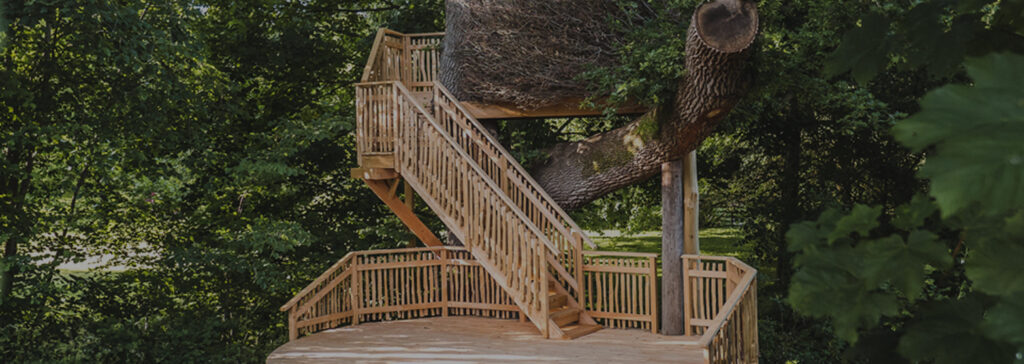
The right choice depends on your site, planning context, and target market. Cabin-style units are the UK market staple. Treehouses are growing in popularity and command the highest rates. We try to avoid a cookie cutter type of development as we know unique spaces perform best on the collection. We advise on the best fit for your land.
Two to four units is often the right starting point depending on how much land you have to work with. It keeps the investment manageable, the operation learnable, and the quality high. Many of the most profitable glamping businesses in the UK are small and premium. You can always grow – starting strong matters more than starting big.
Private en-suite bathrooms are now the expected standard. Add a good kitchen or kitchenette, a quality bed with luxury linen, a log burner or good heating, and private outdoor space. Hot tubs and outdoor baths are strong revenue drivers. The bar has risen – guests compare you to other premium retreats, not traditional glamping.
Privacy and exclusivity are the dominant themes. Guests want seclusion, not a site where they can see their neighbours. Nature connection, wellbeing, and sustainability credentials are increasingly booking drivers. Dark sky experiences, saunas, and outdoor bathing continue to grow. We bring current market intelligence from our sister company, Canopy & Stars to every project.
It varies considerably. This is dependent on the scale, accommodation types, level of infrastructure required, and design ambitions. We provide detailed cost planning alongside revenue projections so you go in with a clear picture.
Relevant grants include the Rural England Prosperity Fund, Farming in Protected Landscapes (for National Parks and National Landscapes), Countryside Stewardship, UK Shared Prosperity Fund schemes and EU Funded Grant Schemes for Ireland such as LEADER. Availability and eligibility change regularly. We track the funding landscape actively and help clients identify and apply for the most relevant grants.
Yes – we manage full grant applications, prepare supporting business plans and financial forecasts, and connect clients with investment partners where appropriate. A strong, well-evidenced application significantly improves your chances. We’ve supported clients in accessing rural development and tourism funding across the UK.
A complete glamping business plan needs: a revenue model (pricing, occupancy, seasonality), a capital cost estimate, an operating cost model, and five to ten-year profit and revenue projections. These are essential for bank lending, grant applications, and investor conversations. We produce all of these in-house.
Absolutely – farmers are among the most successful glamping operators in the UK. A working farm offers authenticity, planning policy support for rural diversification, and often existing infrastructure (tracks, water, power, outbuildings) that reduces setup costs. It’s one of the strongest land types for a viable glamping business.
You can — but it almost always requires a change of use consent. Farmland is protected in planning policy, so changing it to tourist use needs a formal application. That said, farm diversification is actively supported in national planning policy, which strengthens the case. Many of our most successful projects are farm-based glamping developments.
Consistently, yes. The UK glamping market continues to grow, and it generates recurring income that builds asset value over time. Unlike many diversification options, glamping can coexist naturally with working farmland – and the farm setting is genuinely part of the guest experience. We help farming clients assess viability and develop the business case.
Estates are ideally placed for glamping – dramatic landscapes, existing infrastructure, historic buildings, and the space for genuinely private, premium experiences. Many of the UK’s most prestigious glamping retreats are estate-based. We work with landowners and estates on projects from boutique single units to multi-accommodation retreat complexes.
Yes – woodland is one of the most popular and commercially strong glamping settings. Privacy, atmosphere, and natural beauty drive premium bookings. Planning considerations include ecological surveys (particularly for bats), tree protection, and careful siting to avoid ancient woodland. We have strong experience planning and designing woodland glamping sites.
Key requirements include: a site licence from your local authority (for multi-unit sites), public liability insurance (specialist glamping cover), a fire risk assessment and fire safety equipment, electrical installation certificates, gas safety certificates, and GDPR-compliant data handling. We advise on operational setup as part of our consultancy service.
Start with the right booking platforms – we highly recommend speaking with our sister company, Canopy & Stars to reach an active glamping audience. Invest in professional photography before anything else. Build a direct booking website to reduce commission dependency. Instagram is powerful for organic growth. As part of the Canopy & Stars family, we have deep insight into what drives bookings.
Not at all. We work with projects of every scale – from single cabin-unit ventures to large estate retreats. Many of our most rewarding projects are small, high-quality developments where the focus is on doing one thing brilliantly. Scale doesn’t determine whether a glamping business succeeds – quality and positioning do.
We’re based in Bristol and work on glamping and rural tourism projects across the UK — England, Scotland, Wales, Ireland and Northern Ireland. Our planning expertise covers everything from open countryside to National Parks, National Landscapes, and Green Belt. We offer remote consultations and travel for site visits nationwide.
We’re the UK’s leading glamping specialist – combining planning expertise, architectural and interior design, and commercial consultancy under one roof. As part of the Canopy & Stars family, we bring unrivalled industry knowledge and connections. We’re also B Corp certified, reflecting our commitment to people, place, and planet.